The International Face Painting School teaches artists in 70-plus countries. In a 3.5-week sprint we rebuilt their advertising around real creative volume and cold traffic at scale: 94 creatives, 2,300 leads, and a cost per lead that held even as we pushed past €2,000 a day.

The company
The International Face Painting School is exactly the kind of brand you love to work with. Founded by Olga and Igor Murasev, it teaches face painters in the United States and around the world to turn faces — especially kids' faces — into bright, joyful art. More than 2,500 students across 70-plus countries have come through it, and over 35,000 people follow along. It is a warm, bright, happy business, the kind that puts more smiles into the world.
They first came to us for a consultation. After that, they brought us on full-time for a month, with a set of strict targets:
A tight analysis turned up the real problems. The previous setup ran a handful of static creatives — banners and process videos of artists painting faces — with almost no ad copy and no real creative variation. The focus had been on rewriting text, while the campaigns ran on expensive placements that did not convert. The technical side of the launches was thin. Ads kept getting more expensive, the number of leads stayed flat, growth was linear, and no genuinely new approaches were ever tested. On top of that, the audience was burning out and frequency was climbing.
Our approach
The fix was both creative and structural.
Because the brand carries real weight in its market, we made a call most advertisers avoid: go cold, at scale. For a strong brand, cold traffic behaves like warm traffic does elsewhere. The close rates hold up and the results stay strong. So instead of squeezing the same loyal, interest-based audiences, we opened up fresh and cold audiences and gave the algorithm room to find buyers.
Then we fed it. Over 3.5 weeks, working with Lisa — a designer and marketer on our team — we produced more than 94 creatives across roughly 50 unique designs and angles. That volume is what held the cost per lead down even as we scaled.
The client-side marketer was a huge help — with onboarding, and with quickly turning the target audience's triggers and pain points into the actual ads and a strong launch.
Results
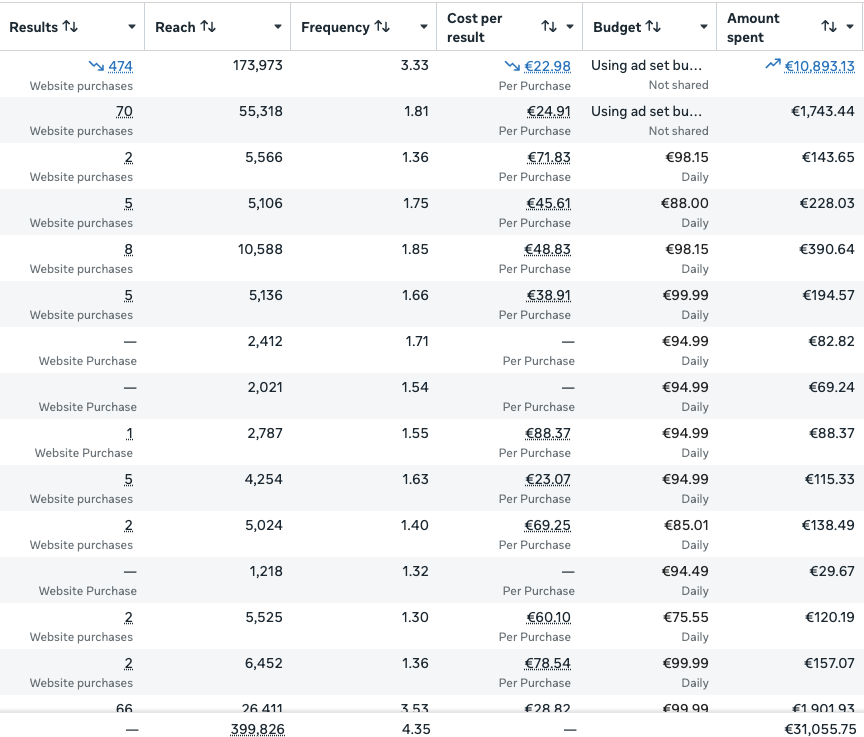
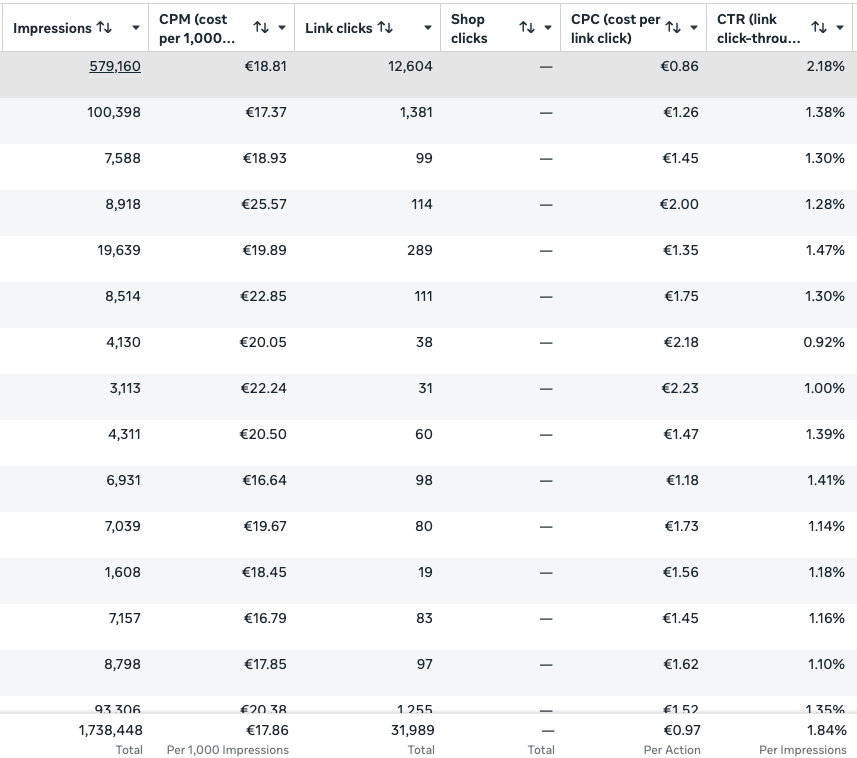
In 3.5 weeks the numbers told the story.
The leads came in at high quality from every corner of the world — exactly what a global school needs. And by the school's own account, the annual summit pulled more buyers than the year before.
| Leads generated | 2,300 |
|---|---|
| Invested | ~€45,800 |
| Average cost per lead | €20–€22 |
| Best-day cost per lead | €5–€6 |
| Ad creatives produced | 94 |
| Unique designs | ~50 |
| Campaigns & ad sets | 50+ |
| Impressions | 1,700,000+ |
| People reached | ~400,000 |
| Cost per click | ~€0.97 |
| Duration | 3.5 weeks |
Proof
What the school said about the work


Why it worked
Two moves made the difference.
First, creative volume. The previous approach leaned on a few static creatives and burned the audience out. We treated creative as the engine, not the decoration — 94 of them in under a month — and that variety is what kept the cost per lead low while we scaled. Audience fatigue is almost always a creative problem, not a budget one.
Second, going cold on the back of a strong brand. When a brand already has authority in its space, cold audiences convert like warm ones, which means you can scale into fresh demand instead of squeezing the people who already know you. That is how you grow spend without watching the cost per customer climb.
This transfers to any established brand that has plateaued. If your ads have gone stale and your warm audience is tapped out, the answer is not a bigger budget on the same creative. It is a real creative engine and the confidence to go cold at scale. Volume of ideas plus reach into new audiences is what breaks a linear growth curve and turns it into a steep one.
The creative force behind it
The creative engine on this project was led by Lisa Skopets — a designer and marketer on our team, and one of the sharpest people we know at trigger-based marketing and ad creative. The 94 creatives and roughly 50 distinct angles that held the cost per lead down at scale came out of her work.
She has a rare combination: the design eye to make an ad look effortless, and the marketing instinct to build it around the exact trigger and pain point that moves a real buyer. If you want creative that does not just look good but actually converts, she is the person to know.